
Buying Opals Online: A Checklist for Spotting Treated or Synthetic Stones
Opal is the one gemstone that can look entirely different in the hand from how it looked on a screen. The play of colour shifts with the light and the angle, and a photograph flattens all of that into a single frozen moment. That is not a reason to avoid buying online — plenty of good stones change hands through small dealers and specialist sites — but it does mean you need to read listings more carefully than you would for a diamond. Here is a practical way to go about it.
Start with the photographs
A brilliant opal on a black background tells you almost nothing. Opals are often shot wet, under a strong lamp, or both, and a stone that flashes red and green in the studio can look like grey porridge on a windowsill at home. As you compare listings, look for:
- More than one image, including a side or edge view
- A scale reference — a ruler, a coin, or the stone held in a hand
- A video, ideally with the stone turning in natural light
- At least one shot on a plain, pale background rather than velvet
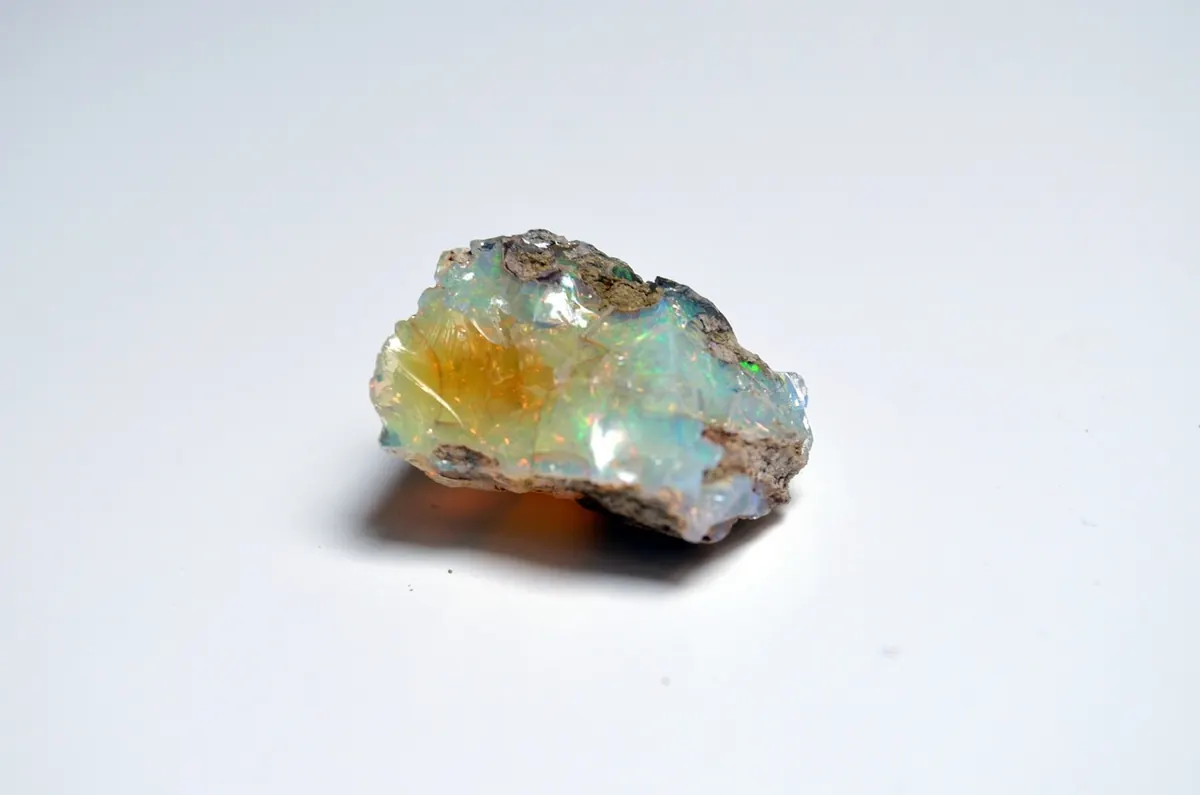
If there is only one photograph and it is a close-up of a flash, ask for more. A confident seller will send them without fuss. One point worth knowing: many Ethiopian opals are hydrophane, meaning they absorb water and become more transparent. Photographed wet, they look vivid; dried out, they can be paler and clearer, with the colour pattern apparently scattered differently. If the stone is Ethiopian, ask for a photo of it dry as well. That is not a trick on the seller's part, but it is information you need.
Read the description like a contract
Gem listings are usually honest but rarely blunt. The key words do the work, so check them one by one:
- Solid or natural — a single piece of opal, cut and polished. This is what most buyers assume they are getting.
- Boulder opal — natural opal formed in ironstone. The host rock is part of the gem, not a flaw or a patch-up.
- Doublet — a thin slice of real opal glued to a backing. Genuine opal, but not a solid stone, and it should never be sold as one.
- Triplet — an opal slice on a backing with a clear quartz or glass cap on top. Also assembled.
- Treated — acid and sugar treatment, smoking, dyeing, resin impregnation or fracture filling. Still natural opal, but altered.
- Synthetic or lab-created — made in a factory. Similar chemistry, none of the rarity.
If a listing does not say "solid", treat the stone as assembled until someone tells you otherwise in writing. The same goes for colour names: "black opal" describes a dark body tone with play of colour, so a greyed-up pale stone is not a black opal simply because it looks dark in the photo.
How treatments and synthetics give themselves away
Synthetic opal
Lab-grown opal has been sold openly for decades and turns up constantly in beads and inexpensive cabochons. Under a loupe it often shows a distinctly regular structure — colour arranged in columns, patches or a lizard-skin pattern — rather than the random, three-dimensional scatter of natural play of colour. Patterns can look too tidy, with abrupt edges and no potch or sand inclusions anywhere. If a seller has six stones that look like siblings, slow down.
Treated black opal
Sugar-and-acid treatment darkens a pale opal by carbonising sugar inside its pores; smoke treatment does something similar with soot. Both can look convincing on screen. In the hand, treated stones frequently have a flat, sooty body colour with the colour sitting close to the surface, and magnification may show it confined to the top layer. These treatments can also change or fade over time with heat and light, which is rarely mentioned in the listing.
Resin, oil and dye
Impregnation and fracture filling hide cracks and brighten a dull stone. Typical clues are a slightly greasy sheen, visible filled lines, or colour that looks smeared rather than crisp. Do not test anything with solvents at home — you can ruin the stone. If you suspect filling, have a jeweller or gemmologist look at it.
Doublets and triplets
Turn the stone sideways. A solid opal has a natural back: potch, ironstone, or a rough cut surface. A doublet has a flat back and a visible join near the girdle. A triplet has a clear, glassy cap and an unnaturally flat top. A thin dark line of adhesive is usually the giveaway.
Questions to ask before you pay
- Is this stone solid, or assembled as a doublet or triplet?
- Is it natural opal, synthetic, or treated — and if treated, how?
- Was the photo taken wet or dry, and can you send both versions?
- What is the exact weight in carats and the measurements in millimetres?
- Are there any fractures, crazing, or filled cracks I should know about?
- What is the return policy, and who pays return postage?
- Will the invoice state the stone's identity and any treatment in writing?
- Can you send a short video in daylight?
Keep the answers. A message that says "natural solid opal, untreated" is worth more than a listing that says nothing at all if you ever need to dispute a purchase.
A quick check when the parcel arrives
Unpack on a plain surface in daylight and compare the stone with the listing photos straight away, while the return window is still open. Look at it dry, in the hand, not under a desk lamp. Check the side profile for join lines, measure it, and weigh it if you have accurate scales. Photograph anything that differs from the description before you contact the seller, and keep the packaging and paperwork until you are satisfied.
Buying with a safety net
Pay by a method that offers buyer protection, buy from sellers with a clear returns policy, and be sceptical of a spectacular stone offered at a fraction of what comparable material fetches — that gap is usually paying for something you have not been told. For inexpensive stones, a careful read of the listing is often enough. For anything expensive, or anything you intend to insure or treat as an investment, pay for a written opinion from an independent gemmologist or a reputable jeweller. A proper examination under magnification will settle questions of treatment, assembly and origin far more reliably than any photograph, and it is money well spent before you commit to a serious purchase.
Photo: lubovlisitsa / Pixabay