Selling Your Wire Jewelry at UK Craft Fairs: Pricing, Display and Legal Basics
A good craft fair can turn a hobby that pays for itself into a small business with a real following. It can also be a long, cold Saturday that costs more than it earns. The difference is rarely luck. It comes down to choosing the right event, pricing with a calculator rather than a hunch, and knowing what the paperwork actually asks of you.
Choose the Fair Before You Choose the Display
Wire and gemstone work sits in a particular market. Buyers who value handmade pieces tend to gather at artisan markets, gallery-style fairs, heritage venues, church and town hall events with a craft focus, and wedding fairs if your range leans bridal. Village fetes and school summer fairs can work, but the price expectations are often set by the bric-a-brac table next door.
Before you pay for a pitch, ask the organiser a few direct questions. How many jewellery stalls will there be? Is it strictly handmade? Is it indoors, and is there power? How wide is the table? What was the footfall like last year, and what did stalls similar to yours take? A good organiser will answer without flinching. If you can, visit the fair as a customer first and watch where people stop and where they walk straight past.
Setting Up a Stall People Can Read
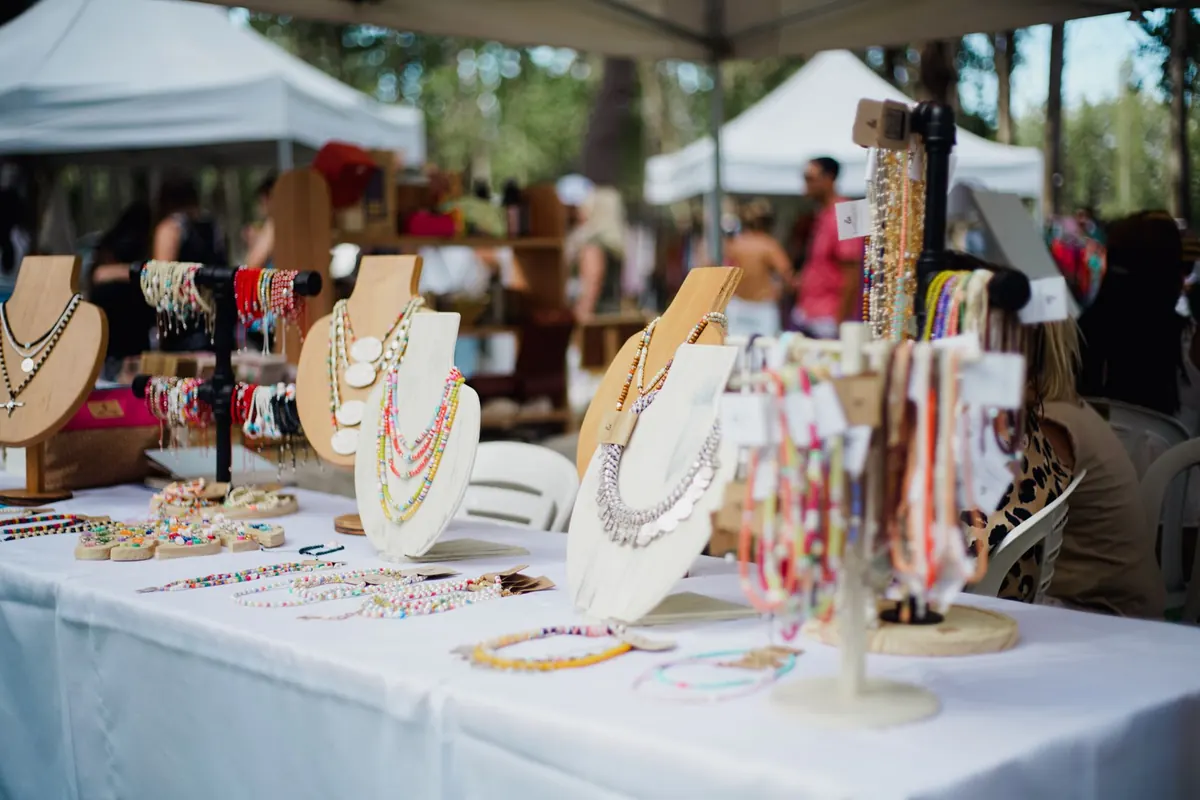
A flat table covered in pieces is the single most common mistake. Eyes travel upwards, and so do hands. Use crates, boxes, stacked display blocks or a small folding riser so that your best pieces sit at chest height. Group by story rather than by category: a gemstone collection here, a wire-wrapped pendant line there, a small under-a-tenner bowl near the front for the browser who is not ready to spend much.
Price everything, clearly. Unpriced work creates an awkward question, and many customers simply assume it is out of their budget and move on. A small handwritten or printed tag in the same style across the stall looks intentional; a scatter of mismatched sticky notes does the opposite.
Lighting matters more than most makers expect. A battery LED lamp with a warm white bulb makes silver and moonstone look alive, and it costs very little to run. Add a small mirror so people can hold a pendant against themselves, a cloth for polishing fingerprints, and a card with your contact details. Keep a friend or a neighbouring stallholder in mind for toilet breaks, and never leave a high-value tray at the front edge of the table while you are distracted.
A stall kit worth having
- Table covering that reaches the floor, in a plain colour that does not compete with the work
- Risers, display busts, trays and a small mirror
- Battery or rechargeable lighting, plus spare batteries
- Tags, a pen, a price list and a notebook for orders
- Cash float, a card reader and a charged power bank
- Tissue, boxes, bags, business cards and a mailing-list sign-up sheet
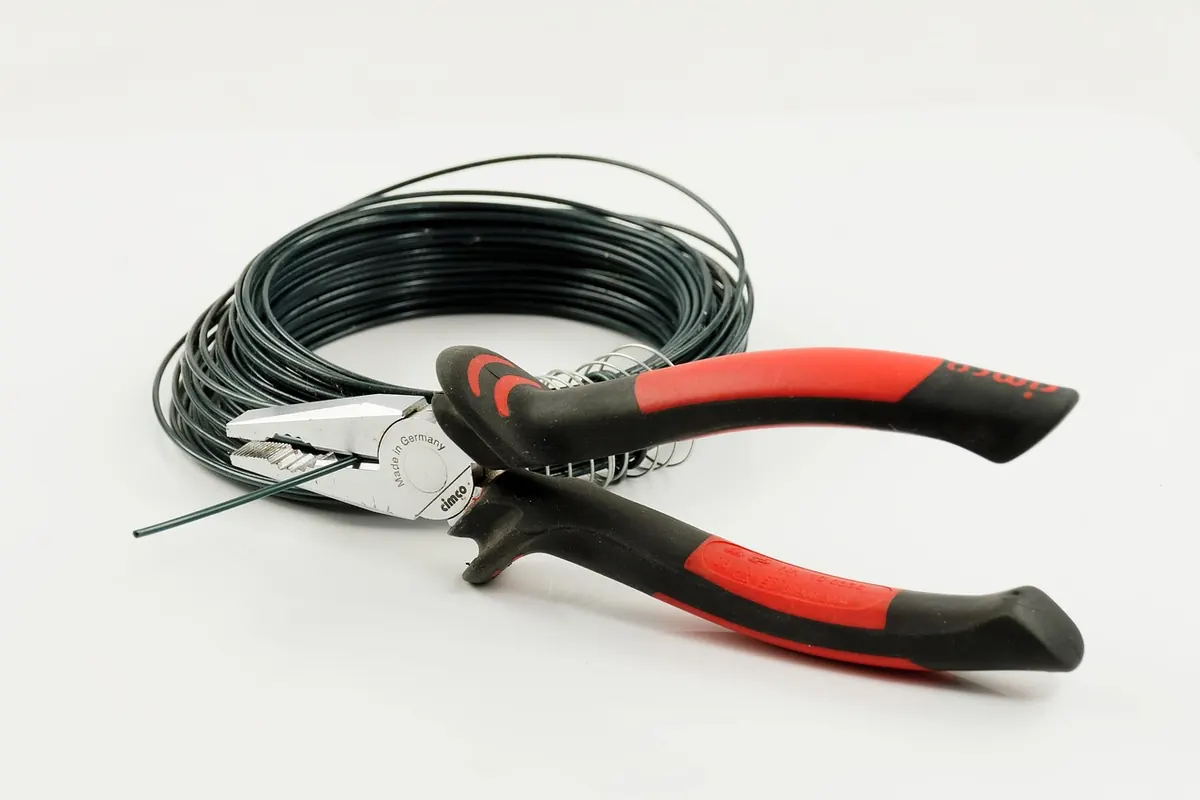
- Scissors, pliers, spare wire, a cloth and a small repair kit
- Water, snacks and layers — most halls are either freezing or stuffy
Pricing That Survives a Slow Day
Start with the cost of the piece. Add the wire, the stone or cabochon, the findings, and a share of your packaging. Then add your time at an hourly rate you have chosen on purpose, not a rate you would be embarrassed to say out loud. Finally, add a contribution towards the things that do not attach to one piece: pitch fees, insurance, travel, the website, the tools that wear out.
What is left is your break-even figure. Most makers then apply a multiple to reach a retail price, and a smaller multiple for wholesale if they sell to shops. A common rule of thumb is to double your materials-and-labour figure for wholesale, and to price higher again for retail, but the number that matters is the one that leaves you a genuine margin after everything is paid for. If a piece consistently sells in the first hour at a price you set nervously, that is information. Raise it.
Build a few price points rather than one. A small pair of earrings, a mid-range pendant and a statement piece give people a way in and a way to trade up. Decide in advance how you handle discounts, and then hold the line — a simple multi-buy offer is easier to explain than a haggling match, and it protects the value of your work.
Packaging and Presentation
Packaging does quiet work. It protects the piece, signals that it is finished properly, and gives the buyer something to keep. It does not need to be expensive. A small kraft box, a sheet of tissue, and a card with your name and simple care instructions is plenty.
Those care instructions are worth writing carefully. Wire jewellery does not enjoy perfume, hairspray, chlorine or being slept in. Store pieces flat or hanging rather than in a tangled heap, and silver will tarnish less in a sealed bag with an anti-tarnish strip. Tell buyers how to bring a piece back to you for a re-shape if it gets bent, and put your contact details on the card so they can.
Insurance, Hallmarking and Product Safety
Three areas of admin trip up new stallholders, and none of them is difficult once you know the shape of it.
Insurance
Most organisers will ask for public liability cover before they confirm your pitch, and the level they need is usually stated on the booking form. Public liability covers you if someone is injured or their property is damaged because of your stall — a display stand toppling onto a buggy, for example. It does not cover your own stock. For that you want a policy that includes your items in transit and on the stall, which is often bundled into specialist craft or market trader cover. Read the exclusions and check whether it covers you outdoors and at every venue you plan to attend.
Hallmarking and descriptions
If you sell precious metal work, the UK assay rules apply. Items above certain weights must be hallmarked before they can be described as sterling silver, gold, platinum or palladium; silver pieces under 7.78 grams are generally exempt, and the other metals have their own thresholds. Gold-filled and plated wire are not precious metals for hallmarking purposes, and describing them loosely as gold or silver is both misleading and potentially a trading standards matter. Check the current guidance from the assay offices before you print a single label.
Nickel release limits also apply to items in prolonged contact with skin, which includes earrings and rings. Buy your wire and findings from reputable UK suppliers and keep the paperwork.
Tax and records
If you are trading regularly, you are likely to be a sole trader and will need to register with HMRC by 5 October following the end of the tax year in which you started trading. There is a trading allowance that lets you earn a modest amount without filing, but using it means you cannot also claim expenses, so it is not always the better option. Keep every receipt, log your mileage to fairs, and record each event's takings, pitch fee and expenses as you go rather than in a panic the following January. Rules on digital record-keeping are changing, so check the current position. This is general information only — for your own circumstances, speak to an accountant or HMRC directly.
The Day Itself
Pack the car the night before against a written list, then set your alarm earlier than feels necessary. Aim to be set up with time to spare so you can stand, breathe and greet people rather than untangling a display while the first customers arrive.
During the day, note what sells, what people pick up and put down, and what they ask for that you did not bring. That notebook becomes your buying and making list for the next fair. Afterwards, write down takings, costs and one thing you would change. Do that three times and you will know exactly which fairs suit your work — and which ones to politely decline.
Photo: Elias Jara / Pexels