
Ethiopian vs Australian Opal: Which Should You Choose?
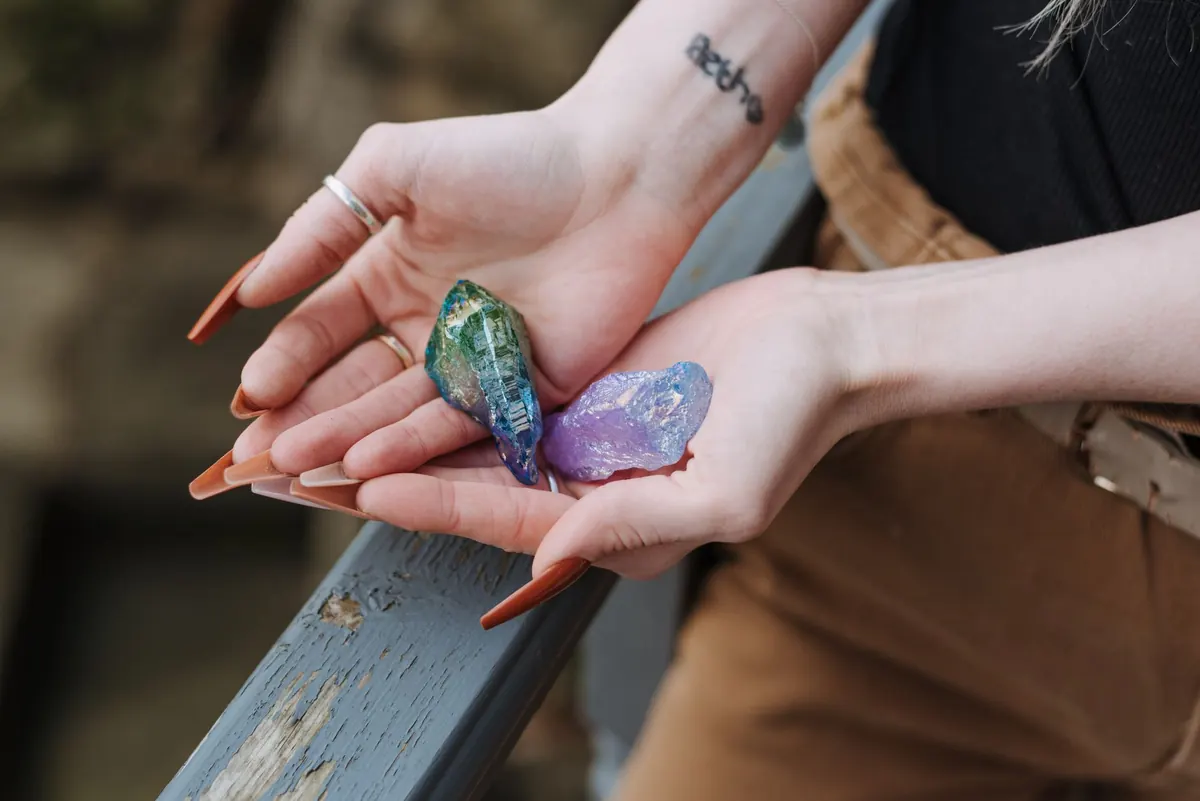
Put two opals side by side under the same lamp and they can look like they came from different planets. One sits dark and smoky, throwing electric green flashes; the other is milky and almost translucent, lit with a confetti of orange and red. Both are opal — silica and water, nothing more exotic — but where the stone formed shapes how it looks, how it ages, and what you will pay for it.
Where Each Stone Comes From
Australian opal forms in sedimentary rock, in ancient sandstone and claystone beds where silica-rich water filled cavities and hardened over millions of years. Three sources matter most to buyers:
- Lightning Ridge, New South Wales — the home of black opal, where the body tone is dark grey to jet black and the colour play sits on top of it like paint on velvet.
- Coober Pedy, South Australia — white and crystal opal, usually with a pale or transparent body. Crystal material is prized because colour appears to float inside the stone.
- Queensland — boulder opal, thin veins of colour running through ironstone. Winton and Quilpie are the names you will see most often.
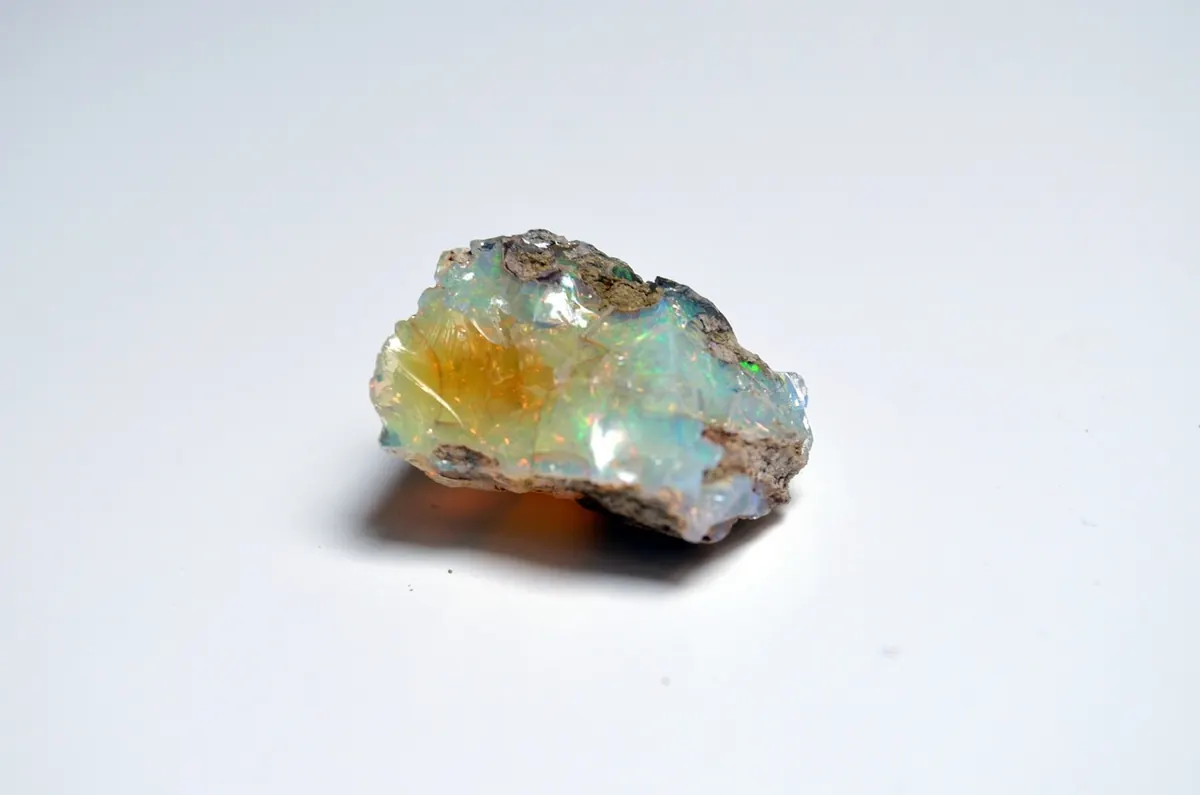
Ethiopian opal is different in almost every respect. It comes from volcanic ground in the highlands, and the two main sources are Wollo province (often written Welo or Wello) and Shewa. Wollo material tends to be white, crystal or near-transparent with bright, rolling colour. Shewa opal is browner, with honey, chocolate and amber body tones and red flashes that appear when the stone is backlit — a look known as contra luz.
Colour Play: Two Very Different Personalities
Australian black opal is the benchmark for contrast. A dark body tone makes even modest colour look vivid, and the best stones show tight, sharp patterns — harlequin, flash, ribbon. Crystal and white opal from Coober Pedy are brighter and cleaner but less dramatic, and boulder opal often reads as bold, painterly flashes breaking through brown ironstone.
Ethiopian opal is usually described as bright rather than dark. Wollo stones often have a soft, glowing quality, with broad sweeps of colour rather than pin-sharp patterns. Many are beautiful and genuinely different from anything Australian — but the body tone is rarely dark, so the contrast is gentler.
The hydrophane question
Most Ethiopian opal is hydrophane, meaning it absorbs water. Soak one and it can turn almost transparent, with colour fading for a few hours or days until it dries out and returns. That is not damage; it is simply how the stone behaves. Australian sedimentary opal, by contrast, is generally not hydrophane, which is one reason it has a reputation for stability.
Durability and Day-to-Day Wear
Opal sits between 5.5 and 6.5 on the Mohs scale, so it is softer than quartz and will scratch if treated carelessly — whatever its origin. The real differences lie elsewhere.
Solid Australian opal, particularly boulder opal with its natural ironstone backing, is the most forgiving option for jewellery that gets knocked about. A boulder opal ring can survive daily wear that would worry a thin crystal cabochon. Australian opal is also more predictable over time, though it still dislikes heat, dry air and sudden temperature changes.
Ethiopian opal needs more thought. Because it absorbs liquid, it can also absorb oils, hand cream, soap and sunscreen, and occasionally those leave a stain that will not come out. Rapid drying after soaking — say, a hot car after a swim — can cause crazing, the fine surface cracks that spell trouble.
- Never clean either stone in an ultrasonic or steam cleaner.
- Wipe with a soft, barely damp cloth and dry immediately.
- Remove Ethiopian opal rings before showering, washing up, swimming or applying lotion.
- Store opals away from radiators and sunny windowsills.
None of this makes Ethiopian opal fragile. Plenty of stones are stable in practice, and not all are strongly hydrophane. But it does mean an Ethiopian opal belongs in a pendant, an earring or an occasional ring far more comfortably than on a hand that spends every day in water.
Availability: What You Will Actually Find
Australian opal supply has tightened over the years, particularly at Lightning Ridge, where good black opal comes out of the ground in small quantities. Much of what is offered today is older stock or from small independent operations. Coober Pedy white and crystal opal is easier to source, and boulder opal remains reasonably steady.
Ethiopian opal arrived on the market more recently and has grown quickly. It is easier to find in larger sizes, and there is far more rough material about — which is exactly why it appeals to cutters and to buyers who want a big, bright stone.
Price: What Drives the Numbers
Opal pricing is not one number; it is a stack of factors, and origin is only one of them. Body tone matters most, followed by brightness, pattern, size and the quality of the cut. A clean, bright black opal from Lightning Ridge sits at the top of the market almost regardless of size. Crystal and white opal sit lower, and boulder opal is often better value per carat than its looks suggest.
Ethiopian opal generally costs less than Australian material of comparable visual impact, and the gap widens as stones get bigger. That is not a quality judgement — it reflects supply, tradition and the premium buyers pay for a Lightning Ridge name.
Two warnings. A "bargain black opal" is usually a doublet or triplet (a thin slice glued to a backing), or treated material, not a solid stone. And a cheap price on an unusually large, bright Ethiopian opal often means the stone has a hidden crack, so always view it dry as well as wet.
A Practical Checklist Before You Buy
- Ask for the specific origin: Lightning Ridge, Coober Pedy, Winton, Wollo or Shewa. Vague answers are a red flag.
- View the stone dry, in daylight, away from the counter lamp. Colour looks stronger under shop lighting.
- For Ethiopian opal, ask directly whether it is hydrophane and how much the colour shifts when wet.
- Inspect with a loupe or a phone torch for crazing, chips and glue lines.
- Match the setting to the stone: a bezel for rings, prongs fine for pendants and earrings.
- Confirm in writing whether the stone is solid, treated, or a doublet or triplet, and get the carat weight.
- Check the returns policy before you pay.
Which Should You Choose?
Start with how the piece will be worn, then work backwards. For an everyday ring, choose Australian boulder opal or a well-protected crystal cabochon. For a pendant or earrings where the stone will not be soaked or knocked, Ethiopian opal gives you striking colour and a larger stone for your money. Collectors chasing the rarest look should focus on Lightning Ridge black opal, while anyone wanting drama on a moderate budget will find plenty to like in Wollo material.
Whatever you choose, buy from a dealer who discusses origin and treatment without hedging. If you are spending a significant sum, ask for a written description and consider an independent valuation for insurance — that is a job for a qualified valuer, not a guess from a sales counter.
Photo: Anete Lusina / Pexels