
How to Care for Opal Jewellery: Cleaning, Storage and Everyday Wear
An opal looks different every time you catch it in the light, and that shifting play of colour is the whole point. It is also a relatively soft stone that dislikes heat, chemicals and sharp knocks more than most gems. The good news is that the habits which keep an opal looking new take seconds each, and they are easy to build into an ordinary week.
Why opals need a gentler approach
Opal sits at roughly 5.5 to 6.5 on the Mohs hardness scale, well below quartz at 7 and far below sapphire or diamond. In practice that means a grain of grit, a granite worktop or the edge of a car door can leave a mark. Chipping at the edge of a cabochon is the most common damage jewellers see, and it usually happens on rings, which take far more knocks than pendants or earrings.
Opal also holds water within its structure, and that water is part of what produces the stone's optical effect. Prolonged heat or a sudden change in conditions can dry a stone out or shock it, which is why the fine surface cracking known as crazing is often linked to drying and thermal shock. There is no way to reverse crazing, so prevention is the only real strategy.
Cleaning opal jewellery safely
Warm water, a mild detergent and a soft brush are all you need. Work over a bowl rather than the sink, and keep the plug in just in case.
- Half-fill a small bowl with lukewarm water — never hot — and add one drop of mild washing-up liquid.
- Let the piece soak for a minute or two to soften any grime behind the setting.
- Brush gently with a very soft baby's toothbrush or a clean make-up brush. Go around the claws and the gallery underneath, but do not scrub the stone itself.
- Rinse in a second bowl of clean lukewarm water, or under a slow trickle.
- Pat dry with a soft, lint-free cloth and let it sit on a towel for an hour before wearing.
Two pieces of equipment should never come near an opal: an ultrasonic cleaner and a steam cleaner. Both are excellent for diamonds and terrible for opals. Skip ammonia-based silver dips too, and never use toothpaste, bicarbonate of soda, vinegar or lemon juice — they are abrasive or acidic, and they dull the polish.
Doublets and triplets
A doublet is a thin slice of opal glued to a backing; a triplet adds a clear cap of quartz or glass on top. Water can seep into the joins and heat or solvents can weaken the adhesive, so don't soak these at all. Wipe them with a barely damp cloth and dry immediately.
Hydrophane opals from Ethiopia
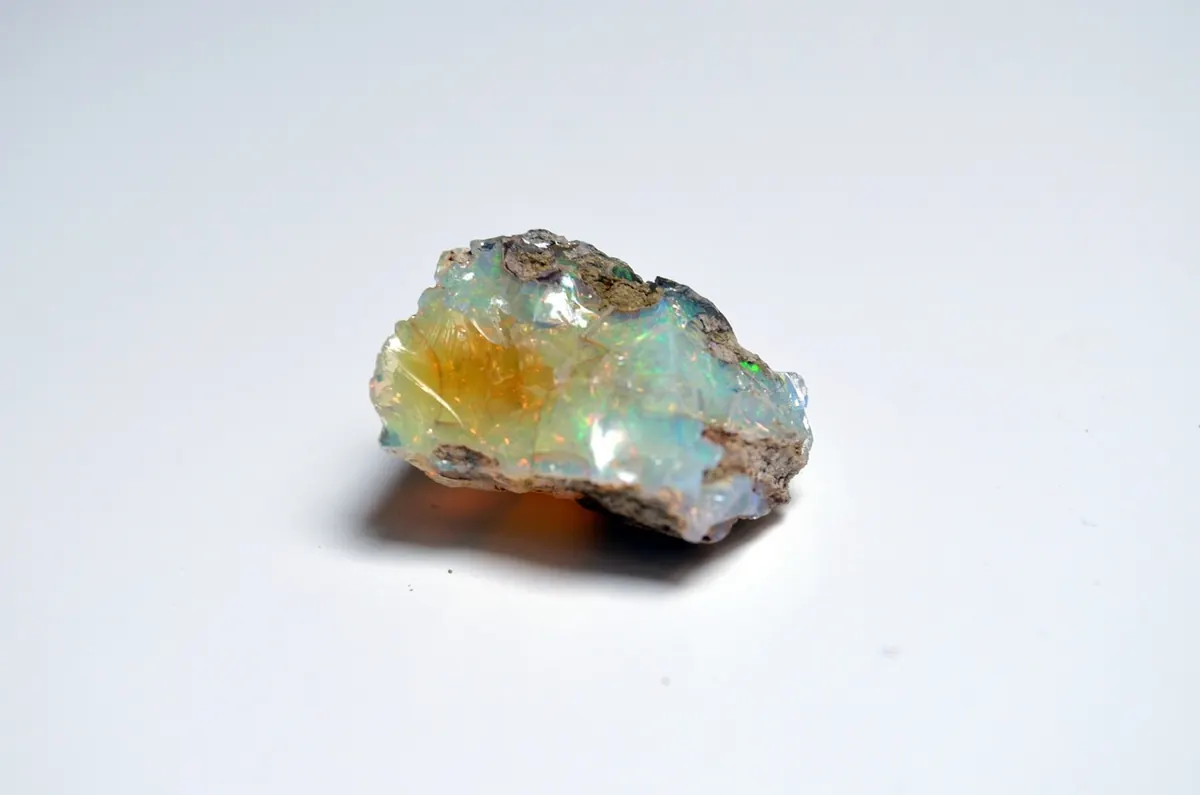
Many Ethiopian opals are hydrophane, meaning they absorb water readily. A stone like this may look clearer or cloudier for days after contact with water before returning to normal. That is expected behaviour, not damage, but it is a good reason to treat any opal of uncertain origin with a damp cloth rather than a soak.
Things to keep away from your opals
- Perfume, hairspray, body lotion, sunscreen and insect repellent — apply these first, then put the jewellery on.
- Household cleaners, bleach, chlorine, dishwasher tablets and drain unblockers.
- Acetone, nail polish remover and alcohol-based products, which can attack the surface or the glue in assembled stones.
- Sudden heat: hot water, hairdryers, ovens, a sunny windowsill or a radiator top.
- Anything abrasive, including polishing cloths that already hold silver polish residue.
Storing opals so they stay bright
Give each piece its own soft pouch or lined compartment. An opal stored loose in a jewellery box will be scratched by harder stones, and the scratches show up badly on a polished dome.
Conditions matter as much as padding. Choose somewhere with a stable, moderate climate — a bedroom drawer rather than a bathroom windowsill, a loft or a conservatory. Avoid long spells in very dry heat. If you keep jewellery in a dehumidified safe or live somewhere extremely dry, some jewellers suggest adding a small, slightly damp cotton pad to the box for long-term storage. It is a gentle measure; never leave a stone sitting in water.
Fasten chains and hang pendants rather than coiling them, so nothing tugs on the setting. Earrings are best kept in a roll where the posts cannot be bent.
Everyday wear habits
The single most useful rule is last on, first off: jewellery goes on after you are dressed and ready, and comes off the moment you get home. Beyond that, take opal rings and bracelets off for the jobs that cause most damage:
- Washing up, cleaning, gardening and DIY.
- Showering, bathing, swimming and hot tubs.
- Gym sessions, sport and lifting anything heavy.
- Applying lotions, perfume or sunscreen.
- Sleeping, if you tend to catch rings on bedding.
Setting choice helps here. A bezel or rubover setting wraps metal around the edge of the stone and protects it far better than tall claws. If you own one special opal ring, wearing it for occasions rather than every day will add years to its appearance, and a pendant or pair of earrings gives you the colour without the risk.
Checks, repairs and when to see a jeweller
Once a month, hold each piece up to the light and look at the claws. Run a fingertip around the setting to feel for movement, and check for any chip or hairline at the edge of the stone. Catch a loose setting early and it is a quick, inexpensive fix; leave it and you may lose the stone entirely.
Do not attempt to tighten or bend a claw yourself, and do not try to polish out a scratch with a home kit. Opal is fragile enough that a small mistake can crack it. A jeweller can re-polish a dulled surface properly and reset a stone safely. If a piece is valuable, make sure it is listed on your contents insurance and have it valued periodically, since opal values move with supply and quality. If the value is significant to you, it is worth speaking to your insurer or a qualified valuer about the right cover.
A routine that actually sticks
Wipe your opals with a dry soft cloth after each wearing. Clean them with lukewarm water and mild soap every month or two, or whenever they look dull. Store them padded, separate and away from heat. Take rings off before chores, showers and swimming. Book an annual check with a jeweller if you wear a piece often.
That is the whole routine, and it fits into a few minutes a month. Do those small things and the colour you fell for will still be there, undimmed, in twenty years' time.
Photo: PNW Production / Pexels